Thursday, March 21, 2013

A gun story with something for everybody

First, if you haven't already, you have to read the complete story. A lede graf doesn't quite convey all the sides of this gun story:


About 12:20 p.m. Wednesday, a woman was in her Ellis County, Texas, home when she heard someone try to open the back door. She contacted her husband, who was in the area. The husband drew a gun on the robbers, who ran from the home, firing as they went, said Jo Ann Livingston, spokeswoman for the Ellis County sheriff's office in Texas.
Although the husband hit one of the robbers, he apparently died from a self-inflicted wound in an adjacent field. The other robber was found in the pickup stolen in Oklahoma, also dead by his own hand.
So, 2 more firearms deaths in the heartland of gun country. But how are the statisticians to allocate these?

Do we score 2 for armed citizen defending his home?

Or do we score 2 for if you keep firearms at home, the person most likely to get shot is a member of your household?

Or do we assign these 2 deaths to the majority of firearms deaths that are suicides?

Do we score 2 for children shot to death?

Other thoughts obtrude.

The Oklahoma family had (at least) 17 firearms. In a nation with only one gun per person, they were hogging the supply. With about 500% of their share, they were depriving at least a dozen other Americans of the chance to have an event like this at their own homes.

I bet there were at least 17 Bibles in that house. (Personal note: there are about 17 printed bibles in my house, if you count indexes and concordances; and hundreds in translation on a Bible app on my iPhone. But no guns.)

The perp was home schooled. Dunno if that included firearms safety and responsibility.

In the comments on an early story about this incident, a reader opined that she imagined the father would now rather have his son back than all those guns. But she was not from Oklahoma. The father was remarkably (to any non-Oklahoman) casual about it:

 “My biggest thing is the family down there and what they're going through. ... I would have done the exact same thing as the homeowner. My heart goes out to them,” Roland Chaffin said.

That's how they roll in Oklahoma.

A flood of readers to RtO

Yesterday, this version of RtO had its biggest day for visits yet. People were reading a post about beach erosion I wrote last year. Dunno why that's suddenly popular.

Happy to see y'all.

The original RtO, still running at mauinews.com, gets about 20 times as many hits as this site.

Content is about 99.5%n the same between them.


Wednesday, March 20, 2013

Pinaciphobia

I am not generally a big fan of Bloomberg News' editorials, but today there's a good one about keeping lists of gun owners.

Pinaciphobia is the fear of lists.

The NRA’s fear is ahistorical as well as irrational. American history is filled with gun regulations, including government surveys of gun ownership. During the Revolutionary era, writes UCLA constitutional law professor Adam Winkler, the founders not only required able men to arm themselves for military service, but also inspected their guns and listed the firearms on public rolls. New Hampshire and Rhode Island conducted door-to-door surveys of gun ownership.
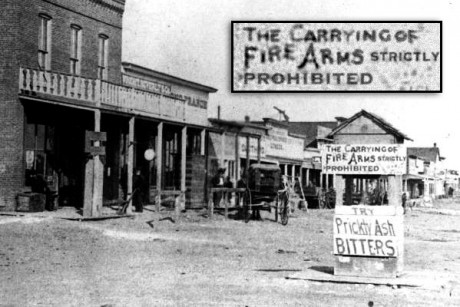
Later, as the nation expanded westward, frontier towns required newcomers to turn in their guns to the sheriff in exchange for a token, the way a “restaurant today handles overcoats in winter,” Winkler writes. In other words, the authorities not only knew who had a gun -- they safeguarded it.

Tuesday, March 19, 2013

Wondrous events

And, as long as RtO is reminiscing about half a century ago, can anybody explain how Roncalli got elected pope?

I was a Catholic student at the time, and while we recognized then that Pope John XXIII was going to be very different from the only pope we'd known, Pius XII, what we couldn't know then was that Roncalli would be followed by a bunch more Piuses, including this Francis, who looks to be another in that same line.

The more I think about it, the more I believe the election of Roncalli was the blackest of black swan events. In fact, while checking a date, I ran across this:

"The following article (below) was originally printed in the Portugal Daily News on November 11, 2002. It provides documented evidence that 'Cardinal' Angelo Roncalli was a practicing Freemason, which incurs automatic excommunication from the Catholic Church. Also, Roncalli's illegal usurpation of the papal throne by force, at the 1958 Papal Conclave, from the lawfully elected and true Pontiff, Gregory XVII formally Cardinal Giuseppe Siri of Genoa, Italy (Click here for information, including recently declassified FBI documents pertaining to this sinister crime) makes the use of the term 'Pope' in this article, in reference to this gluttonous agent of Satan [Roncalli] an impossibility."
Gluttonous agent of Satan, eh? This quotation is attributed to Opus Dei. If accurate, much is explained, but not how Roncalli got elected.

Can we talk?

OK, once again RtO cannot restate the obvious, because nobody else seems to have said it; but on the occasion of the president's trip to Israel and much palaver about discussions, negotiations, settlements, isn't it obvious that there's no point doing anything until the Palestinians simply, firmly and without reservation renounce the Arab war aims of 1967?

Once they do, then the government of Israel could firmly exclude the extremists of the Eretz Israel crowd from politics.

Then maybe they all could get somewhere.

Monday, March 18, 2013

Now we're both shocked

Michelle Shocked is one of the very, very few active singer-songwriters whose CDs I collect. I am not always certain what her lyrics are about, but until now they weren't about dissing homosexuals.

Apparently, she's taken a new view on life.

Michelle Shocked, known for living up to her surname, cleared out San Francisco club Yoshi’s last night, and shut down the venue, after she went on an anti-gay tirade, which she summed up by saying, ”You can go on Twitter and say ‘Michelle Shocked says God hates fags.’ ”
Hmmm. If I understand her biography aright, she's had mental illness in the past. Possibly it has come back in strange garb. For sure, an anti-homosexual attitude doesn't match the rest of her stuff, as heard in her songs.

I'm a little shocked.

Sunday, March 17, 2013

Book Review 274: Berlin: The Downfall 1945

BERLIN: The Downfall 1945, by Antony Beevor. 490 pages, illustrated. Penguin paperback

With the exception of one odd blind spot, Antony Beevor's “Berlin” is an outstanding example of second-generation World War II history.

It benefits both from late discoveries (such as the disposition of Hitler's cranium) and time to reflect on the interpretation of events.

Of the events themselves, Beevor has little new to add, although as with the rest of the Eastern war, Americans have been offered very little popular history, compared to the vast stacks of histories and memoirs of the Western Allies' efforts, and the nearly as vast volumes given the Germans' versions.

This is understandable but unfortunate, since 90% of the European war was fought in the East and even more than 90% of the dying happened there.

This is definitely popular history. Beevor, an ex-officer in the Household Cavalry, knows his stuff but intrudes little of it here. There is not even an order of battle below the level of army group (front in Russian), and statistics are little used. He never even gives round numbers of the men and machines involved.

I regard this as a choice, not a flaw, and perhaps a good one. Unlike so many popular military historians, he does not let fascination with technical matters get in the way of telling the story. Those who want numbers can consult the many well-done books by Richard Overy.

The other reason Americans are not offered much about the Battle for Berlin, one of the mightiest of a big war, is that our army did not take part. (Beevor notes that the Red Army assault on Berlin was the biggest military drive in history, involving about twice as many men [and women, too, in the Red Army] as the Germans used to invade Russia.)

And here is where the only substantive criticism I have of Beevor arises. Many people at the time and since, not least Heimrich Himmler, would have preferred to see the Allied armies drive on Berlin. (Himmler deluding himself that the Western Allies and the Germans could then unite against the Bolsheviks.)

American officers, with exception of the in-way-over-his-head Patton, generally were happy to let the Russians do the dying, and they estimated that taking Berlin would cost somebody 100,000 lives.

Beevor doubts this estimate, figuring that there was a moment when the western approaches were lightly defended.

He gives the eventual butcher's bill for the Red Army as 78,291 dead and 274,184 wounded, numbers not all that much lower than America's total for the European and Pacific wars combined.

General Marshall, with Eisenhower agreeing, was disinclined to spend any American lives for a purely political objective. Berlin was not necessary to defeat the German army.

Beevor says repeatedly that the naïve Americans simply failed to understand the value of the political victory, though conceding that Stalin was never going to allow any but the Red Army to take the prize.
It's an argument that can be made, but Beevor fails to reference the obvious case of Moscow, which neither Hitler nor Stalin thought so highly of in 1941. While Hitler in 1945 refused to evacuate Berlin, Stalin did start evacuating Moscow in '41 and was prepared to fight on if the capital were lost.

And Hitler also did not think Moscow was a supreme objective, since he turned aside suggestions from his generals to concentrate on it.

(Most historians think the Germans could have taken Moscow by concentrating armor in that assault in October-November. It's possible, but considering the logistical incompetence of both the German army and the Nazi party-state, there's room for plenty of doubt.)

Beevor never does say what political benefits the democracies would have gained by taking Berlin, and it is hard to think of any. The USSR's desire for a defensive cordon of subject states from the Gulf of Riga to the Black Sea was entirely understandable. And the Red Army was there.

The Stalinist-style regimes installed were far weaker, as barriers, than strong states would have been, but that was a miscalculation of the Stalin state. Any conceivable Russian state would have sought similar guarantees, just as the United States would not allow either an occupied nor an independent Hawaii. (And American arguments were based on far, far smaller actual threats.)

Under these circumstances, the clearance of Germans from the regions east of the Oder-Neisse line was a necessary event. Beevor gives full weight to the cruelty that this involved, calling it the largest mass transfer of population in history. Certainly it was the largest in such a short period, perhaps 11 million Germans killed or driven out.

The result was an eastern Europe with the possibility of development as a series of nation-states. This could never have happened with Germans interspersed among the populations in the numbers they were in 1939.

Something not to be found in “Berlin: the Downfall” tends to confirm this interpretation.

There is no evidence in this book, or in any other I know of, that the Red Army soldiers, of any rank, understood the racial motivation of the German invasion. For them, war was an opportunity for plunder (of women as well as tangible goods), and Soviet propaganda did not attempt to make them fight for marxism.

Both Overy and Beevor, for example, note the stunned reaction of the Russians when they finally reached East Prussia, to find that, as one put it, the pigs there lived in better houses than Russians did.

They could not believe that Germans, so rich, would bother to rob poor Russians. And, if it had been put to the Germans that way, possibly the Nazis could not have carried the nation to war. But that was not why Germans fought.